
 Annual Report
 Pitch Decks
 Timeline
 Charts
 Buyer Persona
 Marketing Infographics
 KPI Dashboards
 Project Management
 Roadmaps
 SWOT
 Circle
 Triangle
 Hexagon
 Square
 Flag
 Pyramid
 Funnel
 Puzzle
 Arrow
 Pentagon
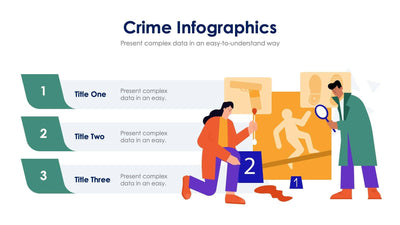
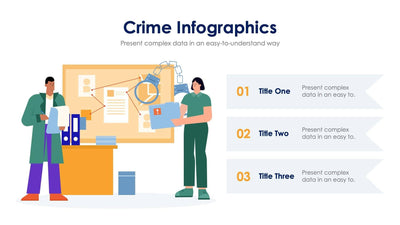
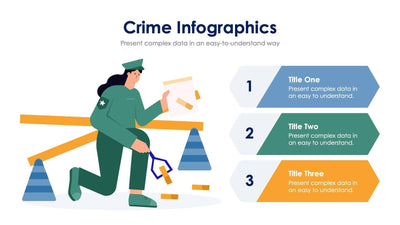
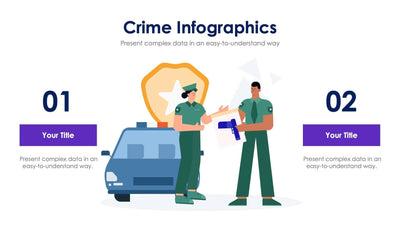
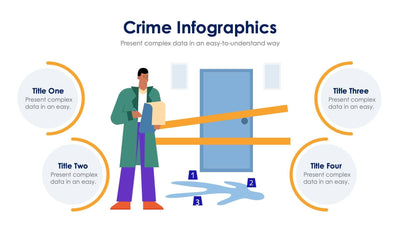
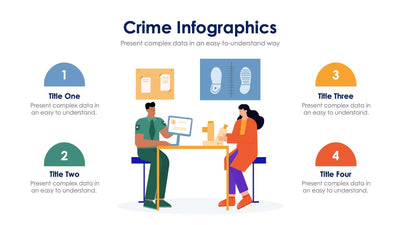
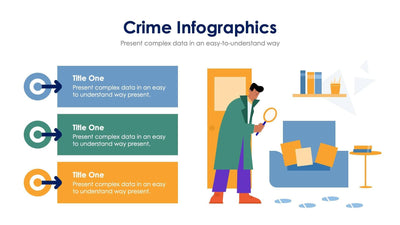
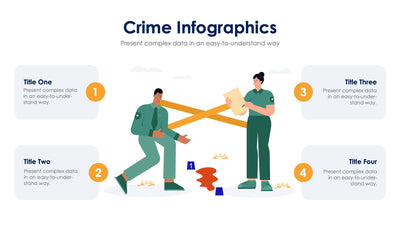

A crime slide helps a speaker walk an audience through an investigation, from the first report to the verdict. A criminology lecturer, a security trainer or a true-crime podcaster could all use one.
The illustrations show a detective with a magnifying glass at a chalk outline, an officer taping off a scene, two investigators at a desk with footprints beside them, and a detective searching a room. Numbered arrows, circles and bars sit beside each picture.
Rename the titles for your own case timeline and recolor the shapes. Illustrations and bars are editable objects in PowerPoint, Google Slides and Keynote.
A free 7-day trial is available on your first purchase only.
A case study, an incident report or a lesson on how evidence is gathered. Lay out the steps in order, one numbered bar per step, and give the audience a short caption under each. A criminology class might walk through one famous investigation, while a security team might use a made-up scenario.
They set the scene before you speak. A detective at a chalk outline suits an opening slide, and two people at a desk suit the analysis stage. Keep the picture and drop in your own wording. An officer with tape works for a slide about securing a location.
Some use three numbered arrows or bars for a short process, and others use four circles for a longer one. Choose by how many stages your case needs, and delete extra shapes you will not use. A timeline of six stages can run across two slides.
Avoid using the slides to name real suspects or make claims you cannot support. Keep any real case details sourced and fair, and stick to public records when you teach from a real event.
Select a bar and change its fill. Every illustration and label is a separate object, so you can change one without touching the others. Add a final slide that asks the audience what they would do next, and leave a minute for questions before you move on. If your session runs long, split the case in two so each half ends on a clear decision point for the group.